MAPS IDIQ Is Exposing the Gaps That Often Derail Major Procurements
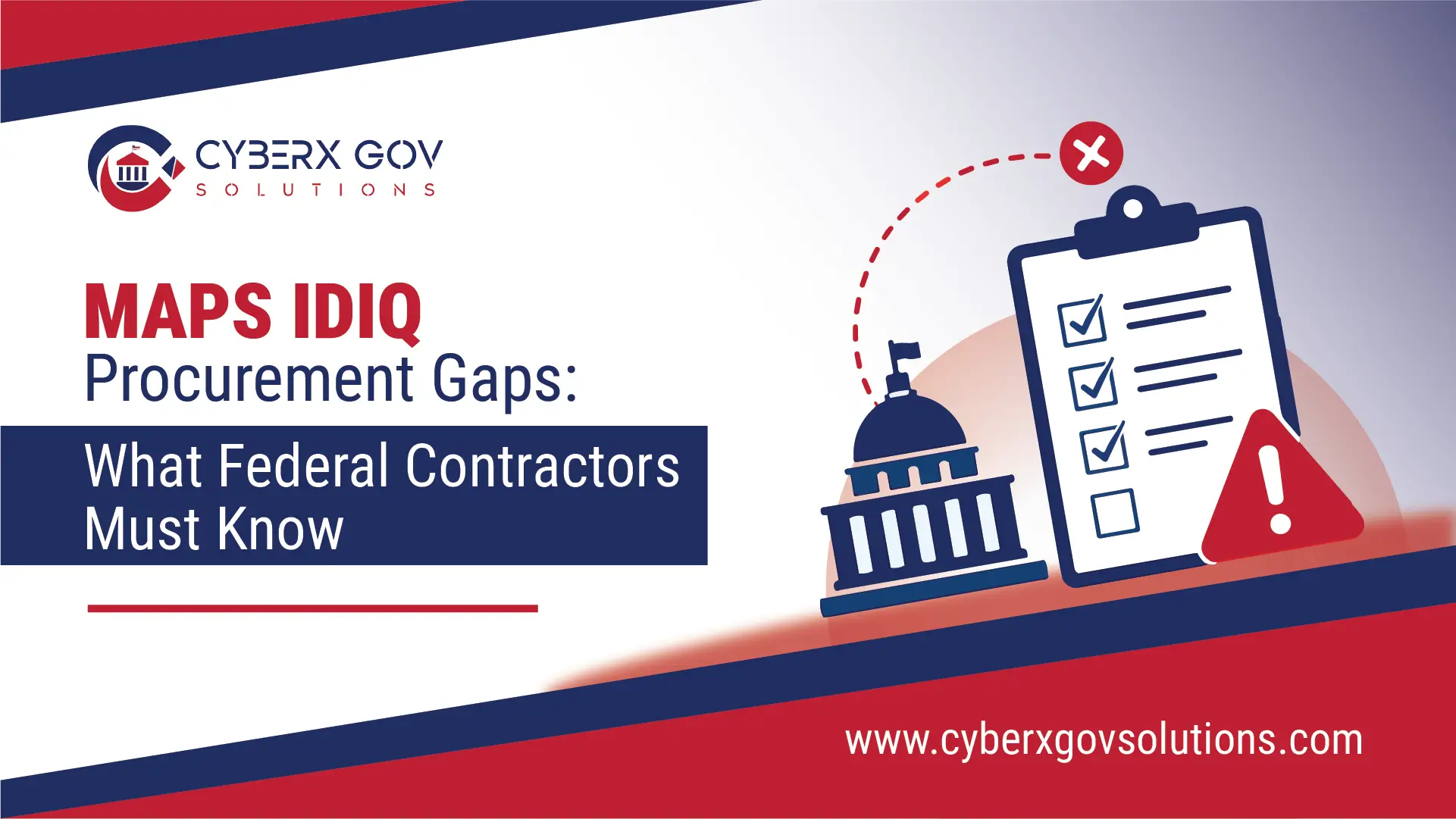
Large federal contract vehicles are often discussed in terms of ceiling value, number of awards, and proposal deadlines, but experienced contractors know those are surface metrics. The real indicators of procurement health are clarity of requirements, transparency of evaluation standards, responsiveness during the question-and-answer phase, and whether competition rules allow qualified firms to present credible teaming solutions. The MAPS IDIQ discussion has brought those issues into sharper focus, making it a useful case study for small businesses and federal contractors preparing for similar enterprise-scale opportunities.
Issue 1: High Question Volume Usually Signals Material Ambiguity
When an acquisition generates an unusually large number of industry questions, the problem is rarely curiosity alone. It often indicates uncertainty around scope interpretation, scoring mechanics, submission expectations, contract structure, labor categories, teaming rules, or supporting documentation requirements. In any major IDIQ, unanswered or partially answered questions force offerors to make assumptions that can directly affect pricing, compliance strategy, staffing models, and proposal architecture. Different bidders then respond to different interpretations of the same solicitation, which weakens the concept of a common basis of competition.
For contractors, this creates real risk. A firm may invest heavily in one interpretation of the requirement while a competitor assumes another. If evaluators later favor a reading that was never clearly stated, the result can be disputes, protests, rework, or lost trust in the vehicle. For proposal teams, the lesson is simple: when question volume spikes, treat the procurement as strategically fluid and plan multiple response scenarios.
Issue 2: Undefined Documentation Standards Create Scoring Risk
One of the most important themes surrounding MAPS is concern over what evidence may be required to validate scorecard claims, qualifications, certifications, experience references, or capability assertions. This issue matters because many large vehicles rely on point-based or criteria-based scoring models where documentary support can determine whether a bidder receives credit.
If documentation expectations are not explicit, contractors face a lose-lose decision. They can over-submit, producing bloated proposals filled with unnecessary attachments, administrative burden, and evaluator fatigue, or under-submit, risking loss of points because required support was implied rather than stated. Neither outcome improves competition quality.
Small businesses are particularly affected because they often have fewer proposal resources and less tolerance for speculative submission strategies. Clear rules on substantiation allow smaller firms to compete on merit rather than guesswork. For future bids, contractors should maintain a library of organized proof assets including CPARS, certifications, project summaries, resumes, transition plans, quality records, and customer references so they can respond quickly when evidence standards tighten.
Issue 3: Teaming Rules Can Determine Whether Small Businesses Compete Seriously
Another recurring concern is whether first-tier subcontractor experience, capabilities, and past performance can be meaningfully considered when evaluating small business primes. This is not a technical footnote. It can determine whether many otherwise capable small businesses are viable contenders.
Small firms frequently build competitive teams by combining niche prime leadership with specialized subcontractor depth in cybersecurity, engineering, cloud services, logistics, staffing surge capacity, or geographic coverage. If a solicitation minimizes or excludes the relevance of those partner capabilities, many emerging firms become structurally disadvantaged against larger incumbents that already possess broad in-house credentials.
For contractors, the takeaway is to read teaming language early and carefully. Understand how the agency treats mentor-protégé relationships, joint ventures, key subcontractors, and attributed past performance. Team composition is not just operational planning. It is an evaluation strategy.
Issue 4: Compressed Timelines Favor the Already Prepared
When a procurement contains evolving guidance, open questions, or documentation uncertainty, short submission windows tend to benefit incumbents and highly resourced bidders. These firms often have dedicated proposal infrastructure, existing content libraries, established pricing models, and pre-negotiated teaming arrangements. Smaller businesses can still compete, but compressed schedules raise the cost of participation and reduce time available for thoughtful solutioning.
This is why mature contractors do not wait for the final RFP release to begin preparation. They develop capture plans early, map likely evaluation factors, gather references, refine resumes, validate registrations, and pre-build compliance matrices. By the time others are locating files with names like “Final_v7_REALFINAL,” they are polishing executive summaries.
What Proposal Audiences Should Learn from MAPS
MAPS highlights a broader truth about federal contracting: large procurements are won long before submission day. Winning firms prepare for ambiguity, maintain reusable evidence packages, structure teams around evaluator logic, and track every amendment as a signal rather than an inconvenience. They understand that proposal success is rarely about writing brilliance alone. It is about readiness meeting opportunity at the right time.
Final Thought
Whatever ultimately happens with MAPS, the procurement has already delivered value as a lesson to the market. Contractors should study the underlying issues closely: unanswered questions can signal risk, vague documentation standards can distort scoring, teaming rules can shape competition, and compressed schedules can reward incumbency. Firms that understand these dynamics will compete more effectively not only on MAPS but also on every serious vehicle that follows. In this market, opportunity rarely goes to the loudest bidder. It usually goes to the best-prepared one, which is irritatingly rational.
At CyberX Gov Solutions, we help federal contractors build exactly that kind of readiness from capture planning and compliance documentation to teaming strategy and proposal development. If your firm is tracking MAPS or positioning for the next major IDIQ, let’s talk before the window closes.
Frequently Asked Questions (FAQs)
What is the MAPS IDIQ and why does it matter to small businesses?
MAPS (Mission Aligned Products and Services) is a large-scale federal IDIQ contract vehicle designed to support enterprise-level government requirements. It matters to small businesses because its procurement structure including teaming rules, documentation standards, and evaluation mechanics determines whether smaller primes can compete on merit or are structurally disadvantaged against larger incumbents. Understanding these dynamics helps small businesses position more effectively for MAPS and similar high-value federal vehicles.
How does high question volume during an RFP Q&A phase affect my proposal strategy?
A high volume of industry questions during the Q&A phase typically signals material ambiguity in the solicitation around scope, scoring criteria, documentation requirements, or teaming rules. For proposal teams, this means treating the procurement as strategically fluid: plan multiple response scenarios, monitor every amendment carefully, and avoid committing heavily to a single interpretation until official guidance clarifies the requirement. Firms that adapt early reduce protest risk and proposal rework.
Can subcontractor past performance count toward IDIQ evaluation criteria?
It depends on the specific solicitation language. Some IDIQ vehicles allow small business primes to attribute key subcontractor experience, certifications, and past performance during evaluation. Others restrict credit to the prime’s own demonstrated capabilities. Under FAR 9.601 and SBA teaming regulations, mentor-protégé and joint venture structures may offer additional pathways for experience attribution. Always review teaming and evaluation language carefully before finalizing your team composition for any major IDIQ.
What documents should small businesses prepare before responding to a large federal IDIQ?
Small businesses should maintain a ready proposal evidence library that includes: CPARS and contractor performance ratings, project summaries with scope, period, and dollar value, key personnel resumes tailored to relevant labor categories, certifications (8(a), SDVOSB, HUBZone, etc.), quality management records, transition plans, and client references.
How early should a federal contractor begin preparing for a major IDIQ opportunity?
Ideally, preparation begins at the Sources Sought or draft RFP stage, often 6 to 12 months before final solicitation release. Mature contractors use this window to develop a formal capture plan, identify and pre-negotiate teaming arrangements, map likely evaluation factors, validate SAM.gov registrations, and build pricing models.