You won the work. You have the budget. You found the candidate. Then the security clearance timeline eats your start date, and a funded seat sits empty for months while the meter keeps running.
You can influence the costly delays. Ensuring a complete SF-86 and clear communication helps you avoid many avoidable setbacks, empowering you to keep the process on track.
This guide lays out the real 2026 clearance timelines from official data, then walks through seven costly delays that push start dates back. Most of them hit hardest for the people who feel them first: hiring managers and contract owners.
Key Takeaways
- The clearance timeline runs in months. Official DCSA data shows the fastest 90 percent of Secret cases near 156 days and Top Secret near 227 days.
- Investigation is the longest phase, but adjudication delays are the ones teams forget to plan for.
- Several delays are self-inflicted. A clean SF-86 and complete paperwork remove weeks of rework.
- Interim eligibility exists for a reason. Many hires can start before final clearance.
- Already-cleared talent is the fastest path, sometimes onboarding in about a day.
What the 2026 Security Clearance Timeline Actually Looks Like
In 2026, a new security clearance still takes months. The Defense Counterintelligence and Security Agency (DCSA) reported that the fastest 90 percent of industry cases in the first quarter of fiscal year 2026 cleared in about 156 days for Secret and 227 days for Top Secret.
Those are the official “fastest 90 percent” figures, and they are the rosy view. Plenty of candidates wait what feels closer to six months to a year once adjudication and case complexity enter the mix. Reported ranges for new applicants land around 1 to 6 months for Secret, 4 to 12 months for Top Secret, and 6 to 18 months for TS/SCI.
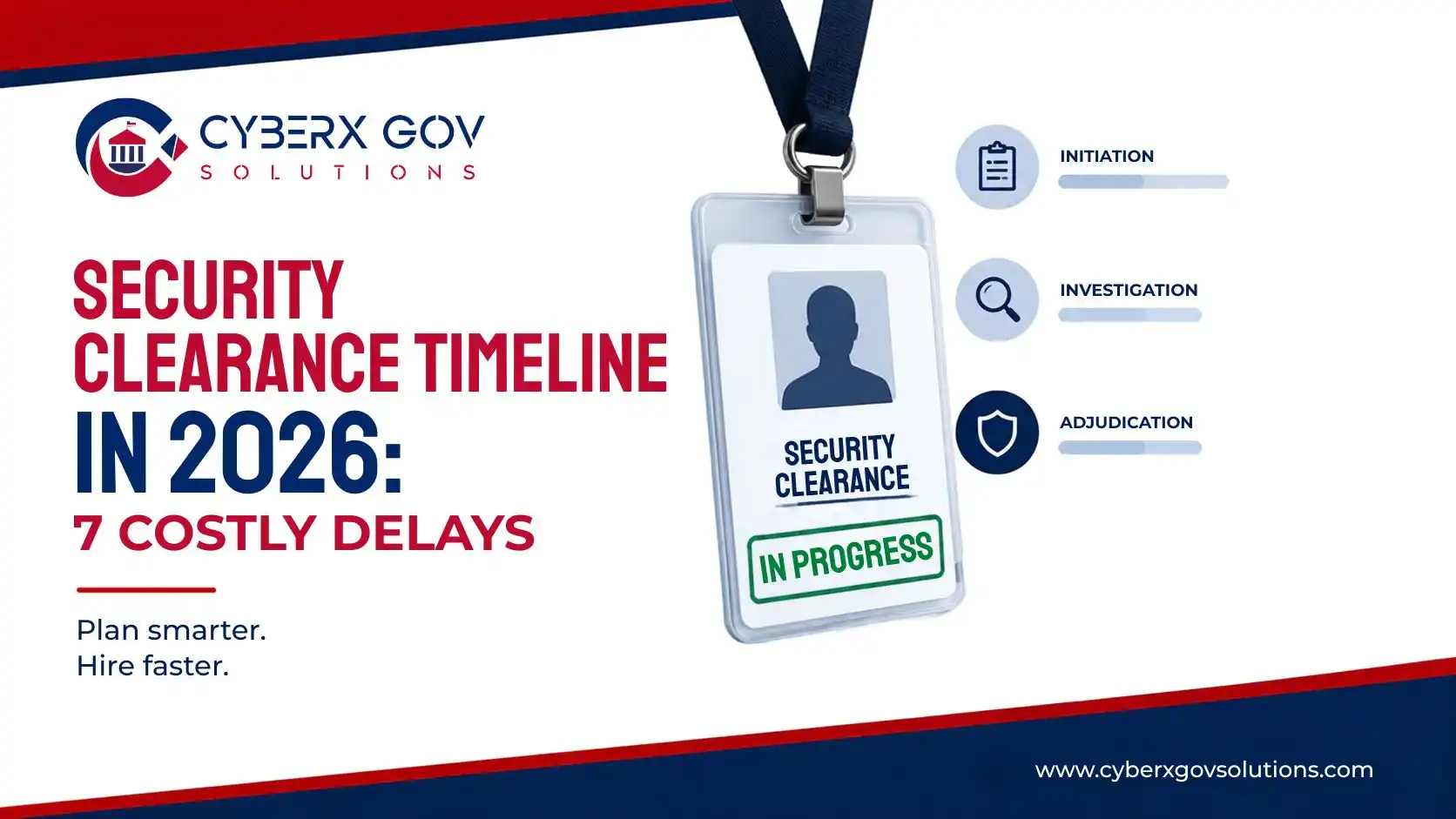
The clearance runs through three phases, and mixing them up is where planning falls apart:
- Initiation: the candidate submits the SF-86, and the security office packages it.
- Investigation: DCSA verifies the record. This is the longest stretch, roughly three-quarters of the total time.
- Adjudication: an authority reviews the investigation and grants or denies eligibility.
Expert tip: A faster investigation does not shorten adjudication. Treat the two as separate clocks, because a case can breeze through the field work and still wait on a final decision.
With the phases clear, here are the seven delays that cost you the most.
The 7 Costly Delays in the Clearance Timeline
1. An Incomplete or Inconsistent SF-86
This is the most common self-inflicted delay. Missing short-term jobs, conflicting dates, unexplained gaps, or omitted foreign travel all force investigators to stop and verify. Every discrepancy piles on interviews and documentation.
The cost: weeks of avoidable rework before the case even moves.
The fix: have candidates complete a thorough, internally consistent form before submission and review it for gaps.
2. Missing Fingerprints and Administrative Gaps
A package with absent fingerprints, the wrong investigation level, or missing data gets bounced back before investigation even starts. These rejection loops are pure waste, and industry data has put them at roughly 12.5 days per case on average.
The cost: almost two weeks lost per rejected package, before any real work happens.
The fix: confirm every administrative item is complete and correct at submission. Your security officer can catch most of it.
3. Weak Contractor-to-Agency Communication
When sponsorship paperwork is incomplete or nobody follows up, files sit idle. The clearance does not fail. It simply waits because no one owns the next step.
The cost: silent weeks where the case stalls with nobody watching.
The fix: assign clear accountability between your Facility Security Officer (FSO) and the sponsoring agency, and keep a follow-up rhythm going.
4. Foreign Contacts and Financial Concerns
Extensive foreign contacts, foreign financial interests, delinquent debt, or bankruptcy all call for deeper review. Investigators have to assess risk, and that takes time. These are legitimate steps, not red tape.
The cost: added investigation time that is hard to predict.
The fix: you cannot rewrite a candidate’s history, but you can set expectations early and encourage thorough, well-documented disclosures.
5. The Adjudication Backlog Everyone Forgets
Teams watch the investigation and lose sight of the decision. Even when investigations speed up, adjudication can lag, and reports in 2026 noted adjudication times moving the wrong way while investigations improved.
The cost: a case that looks nearly done sits for weeks awaiting a final call.
The fix: build adjudication into your schedule as its own phase. Do not promise a start date on investigation speed alone.
6. Polygraph and SCI-Specific Steps
TS/SCI roles add layers. Polygraph scheduling, agency-specific processing, and program access can stretch the timeline well past a standard Top Secret. Backlogs in these steps are common.
The cost: months added for the most sensitive roles, often the ones you need filled fastest.
The fix: for SCI work, plan on the longer end of the range and start recruiting earlier than feels necessary.
7. Betting the Start Date on One Number
The costliest mistake is treating the full-clearance timeline as the only path. Two faster options exist and get overlooked.
- Interim eligibility lets many candidates begin Secret work, and sometimes Top Secret, while the full investigation continues. It is not available for SCI, but for many roles, it turns months of waiting into a start in weeks.
- Already-cleared talent skips the wait almost entirely. Within the Department of Defense, moving an existing clearance can take as little as about a day.
The cost: months of empty-seat billing you never needed to lose.
The fix: ask whether the role qualifies for interim eligibility and put candidates who already hold the right clearance at the front of the line.
Clearance Timeline at a Glance
| Path | Typical 2026 Timeline | Best For |
| Secret (new) | About 1 to 6 months | Standard cleared roles |
| Top Secret (new) | About 4 to 12 months | Sensitive programs |
| TS/SCI (new) | About 6 to 18 months | Intelligence and special access |
| Interim eligibility | Often weeks | Getting Secret hires working sooner |
| Already-cleared transfer | As little as about a day (DoD) | Filling a seat now |
Which Delays You Can Actually Control
Not every delay is yours to fix, and knowing the difference sharpens your planning.
- In your control: SF-86 quality, complete paperwork, fingerprints, FSO follow-up, and whether you pursue interim eligibility or cleared talent.
- Partly in your control: setting expectations on foreign contacts and financial disclosures.
- Out of your control: investigation depth for complex cases, adjudication backlogs, and polygraph scheduling.
The takeaway is simple. You cannot speed up the government, but you can stop feeding the delays and choose the faster paths when they exist.
How CyberX Gov Solutions Can Help
The surest way to beat the clearance timeline is not to wait on one at all.
CyberX Gov Solutions runs a cleared recruitment service that connects federal contractors with pre-screened, security-cleared professionals matched to the right level, from Secret to Top Secret and TS/SCI. When a seat is funded and the clock is running, already-cleared talent is the fastest way to fill it, and we handle time-sensitive and urgent hiring built for exactly that pressure.
When cleared roles sit inside a larger bid, our federal proposal development support helps you present a credible, ready staffing plan, so evaluators see a team that can start on day one.
Conclusion
The 2026 security clearance timeline is not shrinking to a few weeks anytime soon. Official figures put the fastest Secret cases near 156 days, and Top Secret near 227, and the real experience often runs longer once adjudication and complexity are counted.
The good news for hiring managers and contract owners is that the biggest delays are the avoidable ones. A clean SF-86, complete paperwork, disciplined FSO communication, and honest planning for adjudication strip out weeks of waste. And when the seat cannot wait, interim eligibility and already-cleared talent turn a months-long clearance timeline into a start date you can actually promise.
Have a funded seat waiting on a clearance?
CyberX Gov Solutions helps contractors fill cleared roles fast with pre-screened, security-cleared professionals matched to the level your contract needs.
Schedule a free consultation at cyberxgovsolutions.com/schedule-a-meeting and stop losing time to the clearance queue.
Frequently Asked Questions
How long does a security clearance take in 2026?
Official DCSA data shows the fastest 90 percent of industry cases clearing at about 156 days for Secret and 227 days for Top Secret in the first quarter of fiscal year 2026. Real-world waits often run longer once adjudication and case complexity are added, so plan in months, not weeks.
Why does a security clearance take so long?
The security clearance timeline covers three phases: initiation, investigation, and adjudication. Investigation is the longest, roughly three-quarters of the total. Delays grow when a form is incomplete, foreign or financial factors need review, or a case waits in the adjudication queue for a final decision.
What is the difference between Secret and Top Secret timelines?
Secret clearances generally process faster, often in about 1 to 6 months, while Top Secret runs longer, around 4 to 12 months. TS/SCI can take 6 to 18 months because of added steps like polygraphs and program access. Sensitive roles almost always take more time.
Can someone start work before their clearance is final?
Often, yes. Interim eligibility lets many candidates begin Secret work, and sometimes Top Secret, while the full investigation continues. It is not available for SCI access. For many roles, interim eligibility turns a months-long wait into a start measured in weeks.
How can an employer speed up the clearance timeline?
Focus on what you control. Submit a complete, consistent SF-86, include fingerprints and the correct investigation level, and keep your FSO in close contact with the sponsoring agency. You cannot rush the investigation, but a clean package avoids the rejection loops that cost days or weeks.
What is the fastest way to fill a cleared position?
Hire someone who already holds the clearance. An existing clearance can transfer quickly, sometimes in about a day, within the Department of Defense, which skips the investigation and adjudication wait entirely. Partnering with a cleared recruitment specialist is the fastest way to reach that talent.
Does a faster investigation mean a faster clearance?
Not necessarily. Investigation and adjudication are separate steps with separate timelines. A case can finish fieldwork quickly and still wait for a final adjudication decision. That is why teams that plan only around investigation speed are often caught off guard by the real start date.
What causes a candidate’s start date to slip most often?
The most frequent causes are an incomplete or inconsistent SF-86, missing fingerprints or wrong investigation levels, and poor follow-up between the contractor and the sponsoring agency. Each is largely preventable, which is why disciplined submission and communication protect your start dates.