Picture this. A federal bid closes Friday. You log in to update your company record, and you have no access. The person who set up your account left the company months ago. Now nobody can touch your registration.
This happens to small businesses more often than you would think. The fix comes down to one role: the Entity Administrator. Whoever holds it controls your SAM.gov registration.
This guide walks you through what the SAM.gov Entity Administrator role is, who can hold it, and the exact steps to claim it, even when no administrator exists. SAM.gov is the System for Award Management, the official site where businesses register to work with the federal government.
What Is a SAM.gov Entity Administrator?
The Entity Administrator is the person with top-level control of your SAM.gov registration. Think of it as the master key to your federal vendor account.
This role can do things no other user can. It updates your entity record, renews your registration each year, and manages your business details. It also assigns roles to other people on your team.
Without an active administrator, your registration freezes in place. You cannot renew it. You cannot correct errors. And an expired registration means you cannot win or keep a federal contract.
That is why this one role matters so much. Losing it quietly is one of the most common reasons a small business misses a deadline.
Who Can Be an Entity Administrator?
Not just anyone can hold the role. A rule change on March 3, 2023, tightened who qualifies.
Today, the Entity Administrator must be an employee, officer, or board member of the organization. When you register or update your record, SAM.gov asks you to confirm your relationship to the entity.
This trips up a lot of businesses. If you hired an outside consultant or a registration firm to set up your account, that outside person can no longer serve as your administrator. The role has to sit with someone inside your company.
The reason is control. GSA wants the entity itself to own and answer for who can change its registration. A consultant can still guide you. They just cannot be the administrator of record.
Two Ways to Become the Entity Administrator
How you claim the role depends on one question: does your entity already have an active administrator?
When Your Entity Already Has an Administrator
This is the easy path. If someone at your company still holds the role, they can approve you directly.
Here is how it works:
- You create your own SAM.gov account, if you do not have one.
- You request a role on the entity from inside SAM.gov.
- Your current administrator logs in and approves the request.
No paperwork. No notary. Approval can happen the same day. This is why every entity should keep the role with someone reachable.
When No Administrator Exists
This is the harder path, and the one that brings most people to this article. If your administrator left, is unreachable, or never existed, you cannot approve yourself from inside the system.
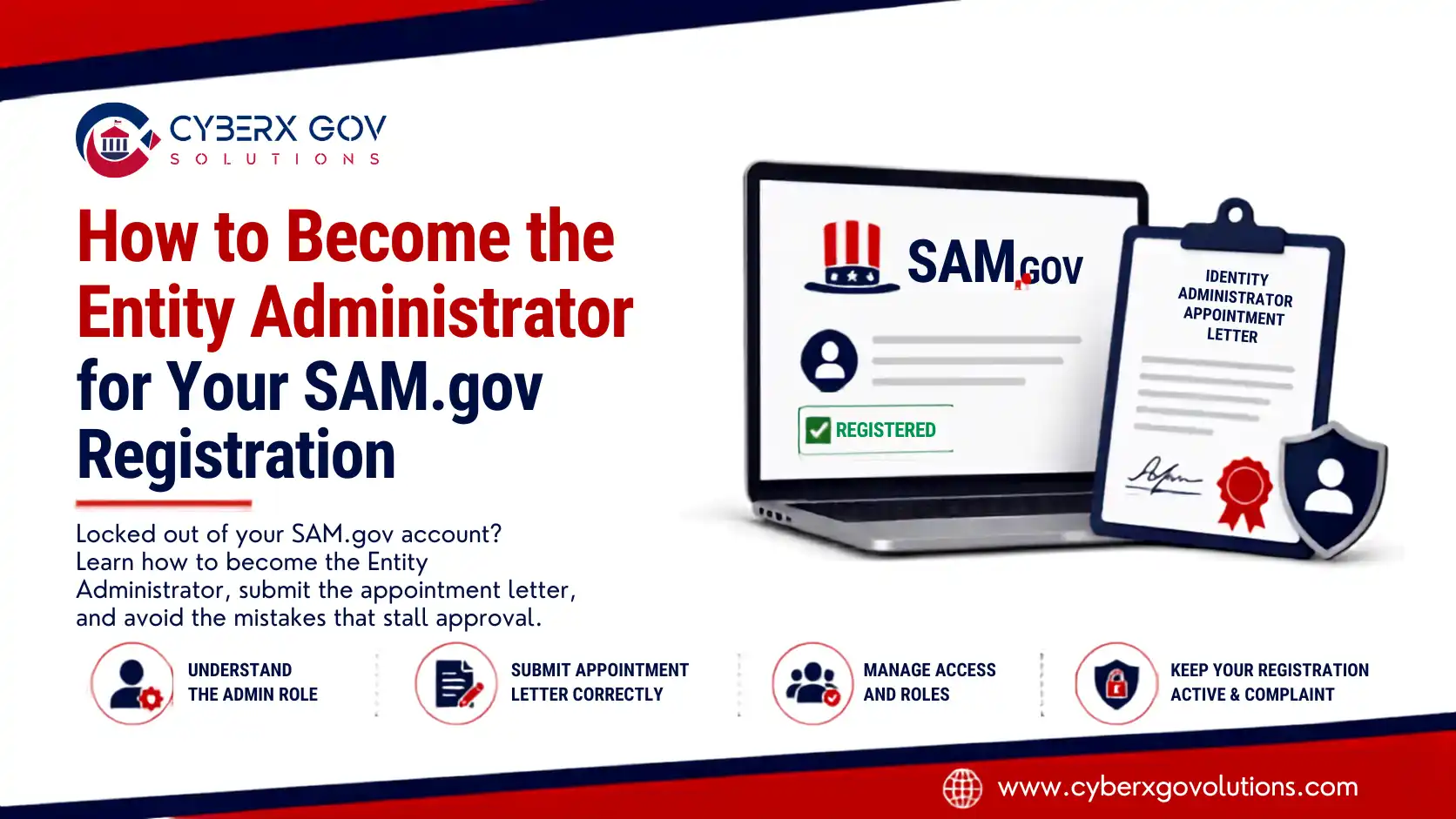
Instead, you submit an Entity Administrator Appointment Letter to the Federal Service Desk (FSD). Many people call it the notarized letter. It formally names you as the new administrator.
GSA has said it is working on alternatives to this letter process. Until those arrive, the notarized letter remains the standard route. Always check FSD.gov for the current method before you start.
How to Complete the Appointment Letter
The letter has strict formatting rules. Small errors cause big delays, so slow down on this part.
- Download a fresh template: Get the current Entity Administrator Appointment Letter template from FSD.gov. Pick the version that matches your situation: single domestic entity, multiple entities, or international entity. Do not reuse an old file you saved last year.
- Use official letterhead: Print the letter on your company letterhead. The legal business name and physical address must match your SAM.gov record exactly.
- Add your Unique Entity Identifier: Include your UEI, the twelve-character code that replaced the old DUNS number in April 2022. If a template still asks for DUNS, you have an outdated version.
- Match the new administrator’s details. The name, email, and phone number in the letter must match the person’s SAM.gov login exactly. A single mismatched character can get the letter rejected.
- Get the right signature. An officer with authority to bind the company must sign it, such as the President, CEO, or a partner.
How to Notarize and Submit Your Letter
Once the letter is written, two steps remain.
- Step 1: Notarize it. The authorized officer signs the letter in front of a valid U.S. Notary Public. The notary then applies their seal.
- Step 2: Submit it to FSD. Scan the signed, notarized letter as a PDF. Go to FSD.gov and select “Create an Incident.” Choose System for Award Management as the system and the notarized letter option as the issue type. Attach your PDF and submit.
GSA reviews these requests by hand. A clean submission usually clears in about three to five business days, though busy periods can take longer.
FSD may also ask for the original signed copy with the wet-ink notary seal. Deadlines for sending that physical copy have shifted over time, so confirm the current requirement on FSD.gov rather than trusting an old blog post.
Why Appointment Letters Get Rejected
Most rejections come from a handful of avoidable errors. Run through this checklist before you submit:
- The business name or address on the letter does not match SAM.gov.
- The template is an outdated version.
- The administrator’s email or phone does not match their SAM.gov account.
- The UEI is missing or entered wrong.
- The notary seal is missing, smudged, or unreadable.
- The signer lacks the authority to bind the company.
Catch these before submission and you avoid the resubmission cycle that eats days you may not have.
Add a Backup Administrator Before You Need One
Here is the step almost everyone skips. Once you have one administrator, appoint a second.
A backup administrator can approve role requests and keep the account moving if the primary person is out or leaves. It costs nothing and takes minutes.
Most businesses learn this lesson the hard way, after they get locked out. Adding a backup now saves you from repeating the notarized letter process later.
How CyberX Gov Solutions Can Help
Getting the Entity Administrator role sorted is part of a bigger job: being ready to compete for federal work. That is where a guide helps.
CyberX Gov Solutions supports small businesses through its Get Fed Ready™ program. The program includes SAM.gov registration support, from entity details and representations to validation issues that stall accounts.
If your registration is stuck or you are setting one up for the first time, having someone who knows the process removes the guesswork. You spend less time fighting the portal and more time chasing contracts.
Conclusion
The Entity Administrator role is small in name but large in consequence. Whoever holds it controls your ability to renew your registration, fix errors, and stay eligible for federal contracts.
If an active administrator exists, claiming the role takes minutes. If one does not, the appointment letter gets you there, as long as you follow the formatting rules and confirm the current process on FSD.gov.
Sort it out before a deadline forces your hand. And once you have access, add a backup so you never scramble again.
Need help getting your SAM.gov registration right? CyberX Gov Solutions can guide you through it through the Get Fed Ready™ program.
Schedule a free consultation at cyberxgovsolutions.com/schedule-a-meeting/ and get your account ready to compete.
Frequently Asked Questions
What is an Entity Administrator in SAM.gov?
It is the person with top-level control of your SAM.gov registration. This role updates your entity record, renews the registration each year, and assigns roles to other users on your team. Without an active one, your account cannot be maintained.
How do I become the administrator if the old one left the company?
When no active administrator remains, you cannot approve yourself inside SAM.gov. You submit an Entity Administrator Appointment Letter to the Federal Service Desk to be named as the new administrator. Confirm the current process on FSD.gov before you start.
What is the notarized appointment letter, and when do I need it?
It is a formal letter that names a new Entity Administrator, signed by a company officer and stamped by a notary. You need it only when your entity has no active administrator to approve your role request. If an administrator already exists, you can skip it.
Where do I download the correct letter template?
Download it directly from FSD.gov, and pick the version that fits your situation: single domestic entity, multiple entities, or international entity. Always grab a fresh copy rather than reusing an old file, since GSA updates the format over time.
Who is allowed to sign the appointment letter?
An officer with authority to bind the company must sign it, such as the President, CEO, or a partner. That person signs in front of a valid U.S. Notary Public, who then applies the seal.
How long does administrator approval take?
When an existing administrator approves you inside SAM.gov, it can happen the same day. When you submit an appointment letter, GSA usually reviews it within a few business days, though busy periods can take longer.
Why do appointment letters get rejected?
Common causes include a business name or address that does not match SAM.gov, an outdated template, a mismatched administrator email or phone, a missing or wrong UEI, and an unreadable notary seal. Checking these before you submit prevents the resubmission cycle.
Can a third party, like a consultant or registration firm, be the administrator?
No. Since March 3, 2023, the role must be held by an employee, officer, or board member of the entity. A consultant can guide you through the process, but the administrator must be someone inside your company.
How do I add a backup administrator?
Once you have one active administrator, have that person invite or approve a second team member for the role from inside SAM.gov. A backup keeps your account moving if the primary administrator is out or leaves, so you avoid the appointment letter process later.