Every cleared recruiter knows the feeling. You post a Top Secret role, wait three weeks, and get four applicants. Two of them have already turned down your salary range at another firm. The math behind that frustration is brutal. The White House has estimated that roughly 500,000 cybersecurity jobs sit open across the country, and a large share of the defense and intelligence roles among them require a security clearance. Yet fewer than four million Americans hold clearance eligibility. Every contractor is fishing in the same small pond. You cannot poach your way out of that shortage. Clearance sponsorship offers a different path: hire people who can pass a background investigation, sponsor them, and grow your own cleared workforce. This guide explains how sponsorship works, what it really costs, and how to build a pipeline that keeps your contracts staffed.
Why the Cleared Talent Market Feels Impossible
Demand for cleared professionals keeps climbing while the supply grows slowly. Clearance processing is a big reason. Industry reporting that cites Office of the Director of National Intelligence (ODNI) data puts average processing time above 240 days for a Top Secret clearance and above 130 days for a Secret clearance. Those timelines push contractors toward candidates who already hold active clearances. That shortcut creates a bidding war. Cleared professionals jump between contractors for modest raises, salaries inflate, and the total talent pool never gets bigger. The companies that win in the long term are the ones adding new people to the pool instead of recycling it. Part of the problem is also a matching gap, not just a numbers gap. Plenty of cleared people work in roles below their clearance level, or in locations far from where the demand sits. A firm that only searches for a perfect match, in the right city, with an active TS/SCI, is competing for a sliver of an already small market.
What Clearance Sponsorship Actually Means
Clearance sponsorship is a company’s formal request to the government to investigate and clear an employee for classified work. An individual cannot apply for a clearance on their own. A sponsoring employer must submit them against a real contract requirement. Two things must be true before you can sponsor anyone. First, your company needs a Facility Security Clearance (FCL), the business-level clearance that lets your firm handle classified work. Second, you need a bona fide need tied to an active or awarded classified contract. The Defense Counterintelligence and Security Agency (DCSA) will not process clearances submitted just to build a bench.
Who Pays for What
The government pays for the background investigation itself. Your company absorbs everything around it: Facility Security Officer (FSO) labor, paperwork, onboarding, and the productivity you lose while a hire waits for adjudication. Industry estimates put the full cost of sponsoring, onboarding, and retaining a new TS/SCI hire at $12,000 to $25,000 per person. That sounds steep until you compare it with the alternative. Candidates who need sponsorship accept standard market salaries. Candidates with active clearances command a premium that repeats every single year. Over a five-year contract, sponsorship usually wins.
The Business Case for Growing Your Own
Sponsored employees tend to stay. When a company invests in someone’s clearance and career, that person builds loyalty that the job-hopping cleared market rarely produces. Lower turnover means fewer vacant billets, fewer recruiting fees, and stronger past performance ratings. A sponsorship pipeline also changes how you bid. When a new task order drops with TS/SCI requirements, firms with an internal bench promote from within instead of scrambling on the open market. Smart contractors sponsor upgrades, too. They hire professionals with Secret clearances into lower-level roles, then move them up to Top Secret as contract needs grow. Consider a simple example. A mid-sized IT subcontractor hires two veterans through SkillBridge and sponsors their Secret clearances against an existing contract. Eighteen months later, a recompete adds Top Secret requirements. Instead of paying premium rates for outside hires, the firm submits upgrade requests for people who already know the mission and the customer. The proposal team lists named, committed staff, which strengthens the bid itself. Evaluators notice when a staffing plan names real people instead of “to be determined” placeholders.
How to Build a Clearance Sponsorship Pipeline
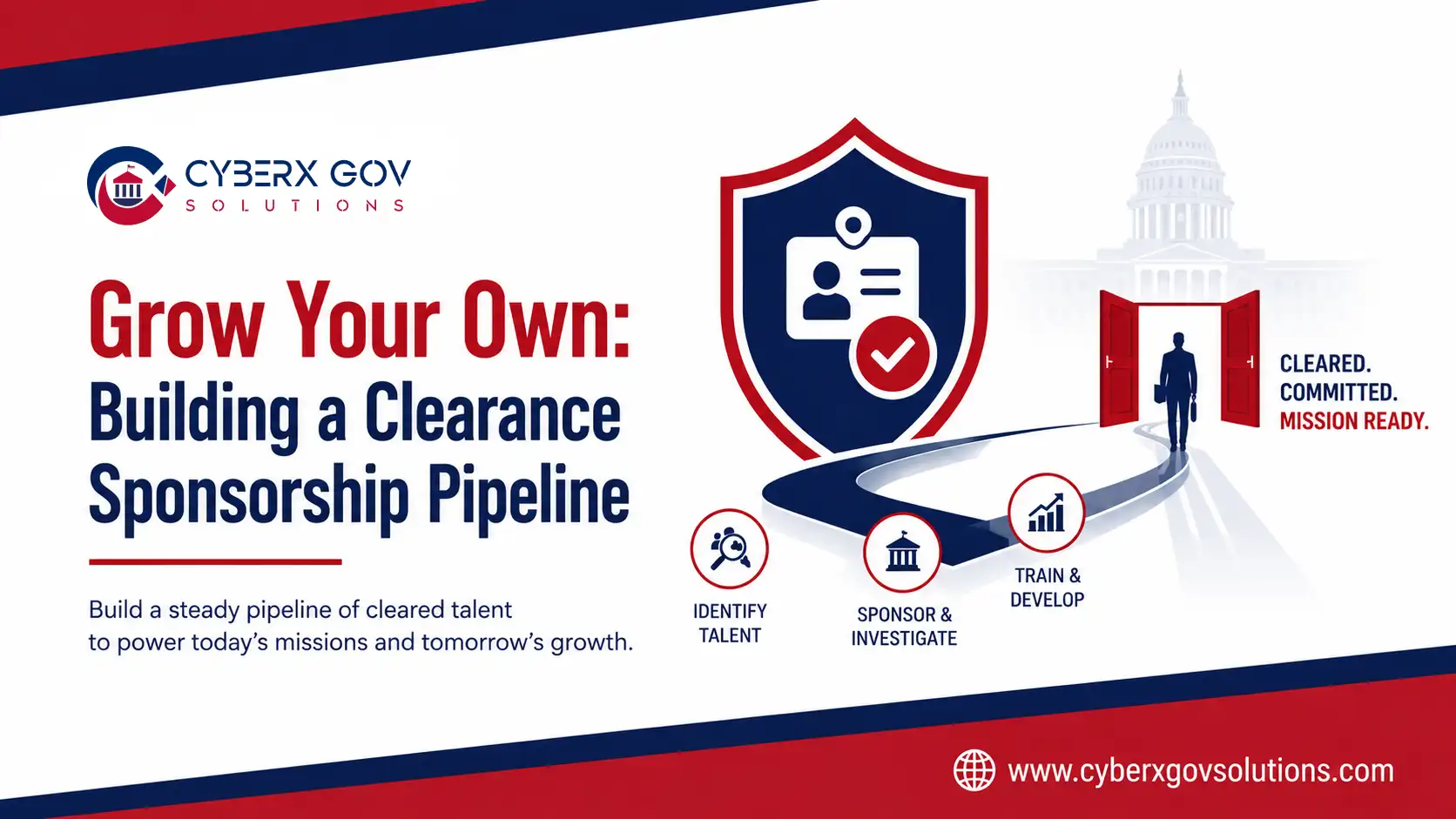
Treat sponsorship as a repeatable system, not a one-off scramble. Here is the sequence that works:
- Step 1: Secure your FCL first. Without a facility clearance, you cannot sponsor anyone. If you are a subcontractor without one, sponsorship responsibility shifts to your prime, and so does control over your people.
- Step 2: Forecast your clearance needs. Map upcoming bids and recompetes against the clearance levels they require. Start sponsorship planning during capture, not after award.
- Step 3: Recruit clearable talent. Target is transitioning military members through DoD SkillBridge, which lets service members intern with employers during their final months of service. Veterans, recent graduates in high-demand fields, and your own uncleared employees are all strong candidates.
- Step 4: Screen for clearability. Look at the whole person before you submit. Financial problems, recent drug use, and foreign contacts are the most common issues that slow or sink an investigation.
- Step 5: Use interim clearances. Interim Secret determinations can arrive in days or weeks, letting new hires start limited work while the full investigation runs.
- Step 6: Build a retention plan. A cleared employee becomes a target for recruiters the day their clearance finalizes. Career paths, training budgets, and competitive reviews protect your investment.
Mistakes That Stall Sponsorship Pipelines
The most common failure is sloppy paperwork. DCSA has reported that sponsorship packages average nearly two submission cycles each, with over half rejected on the first pass. Every rejection adds weeks. A trained FSO or an experienced recruiting partner who prepares complete packages saves more time than any other fix. The second failure is waiting for a contract award before thinking about people. By the time you win, the clock is already running on delivery. Contractors who identify clearable candidates during the proposal phase staff up months faster than those who start recruiting after signature. The third failure is skipping retention planning and watching a freshly cleared employee walk across the street for ten percent more.
How CyberX Gov Solutions Can Help
Building a pipeline takes time that most contract teams do not have, especially when a delivery deadline is approaching. CyberX Gov Solutions supports contractors through its Cleared Recruitment service, which matches pre-screened professionals at the Secret, Top Secret, and TS/SCI levels to specific roles and contracts. The team also handles proposal and pre-award recruitment planning, so you can line up cleared and clearable candidates before you bid instead of scrambling after award. For firms facing urgent staffing gaps, time-sensitive hiring support keeps billets from sitting empty while your longer-term pipeline matures.
Conclusion
The cleared talent shortage is not going away. Processing times remain long, demand keeps rising, and the pool of active clearance holders grows too slowly to meet it. Contractors who rely only on poaching will keep paying more for the same recycled talent. Clearance sponsorship flips that equation. By hiring clearable people, sponsoring them against real contract needs, and keeping them after their clearances finalize, you build a workforce your competitors cannot bid away. The firms that start now will hold the staffing advantage for the next decade of federal work. You do not have to build that pipeline alone. CyberX Gov Solutions helps primes and subcontractors plan cleared staffing, find pre-screened cleared talent, and fill urgent roles fast. Schedule a free consultation at cyberxgovsolutions.com/schedule-a-meeting/ to talk through your next contract’s staffing plan.
Frequently Asked Questions
Can a company sponsor a security clearance without a federal contract?
No. Sponsorship requires a bona fide need tied to an active or awarded classified contract. DCSA does not process clearance requests submitted only to build a future bench of cleared employees.
Does an employee ever pay for their own security clearance?
No. The government funds the background investigation, and the sponsoring employer covers administrative and onboarding costs. Any company asking a candidate to pay for a clearance is a red flag.
What is an interim clearance, and how fast can someone start work?
An interim clearance is a temporary determination granted while the full investigation continues. Interim Secret decisions can arrive within days to a few weeks, allowing a new hire to begin limited classified work almost immediately.
Can a subcontractor sponsor clearances for its own employees?
Yes, if the subcontractor holds a valid Facility Security Clearance at the required level. Without an FCL, sponsorship responsibility shifts to the prime contractor, which also gives the prime more control over those employees.
Do clearances transfer when an employee changes companies?
An active clearance held in the government’s system can move to a new employer through reciprocity, usually without a new investigation. This is why contractors compete so hard for candidates who already hold current clearances.