
GSA’s New AI Clause Is in Effect: What Small LLM Vendors Should Know
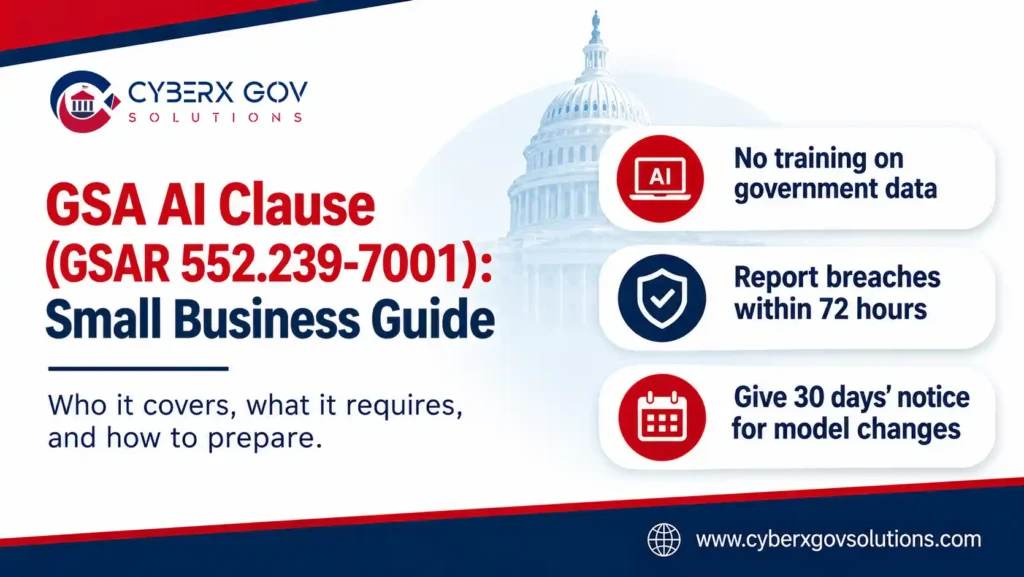
Does your software have an AI assistant inside it? If you sell that software to the federal government, a new rule already applies to you, and it took effect before most small businesses even heard about it. On October 19, 2026, the General Services Administration (GSA) put a new contract clause into force for systems […]
Can You Get a Security Clearance With Debt, Foreign Contacts, or Past Drug Use?
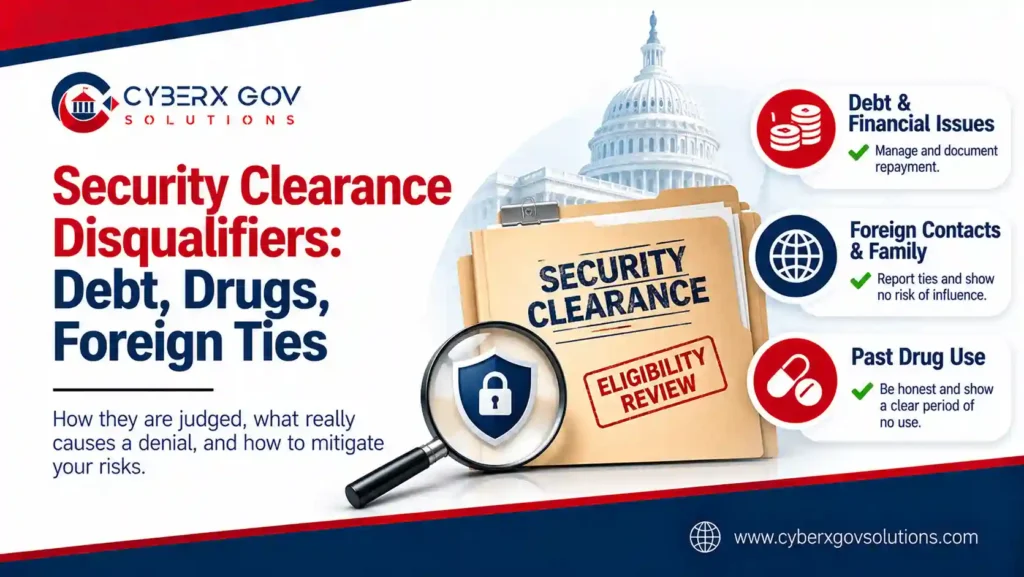
A late credit card. Relatives overseas. A joint you smoked years ago. Now a cleared job is on the table, and part of you is already convinced you have blown it. Take a breath. Most of the security clearance disqualifiers people worry about are not automatic denials at all. They are concerns an investigator reviews […]
SF-86 Checklist: How to Avoid Clearance Delays and Rejections
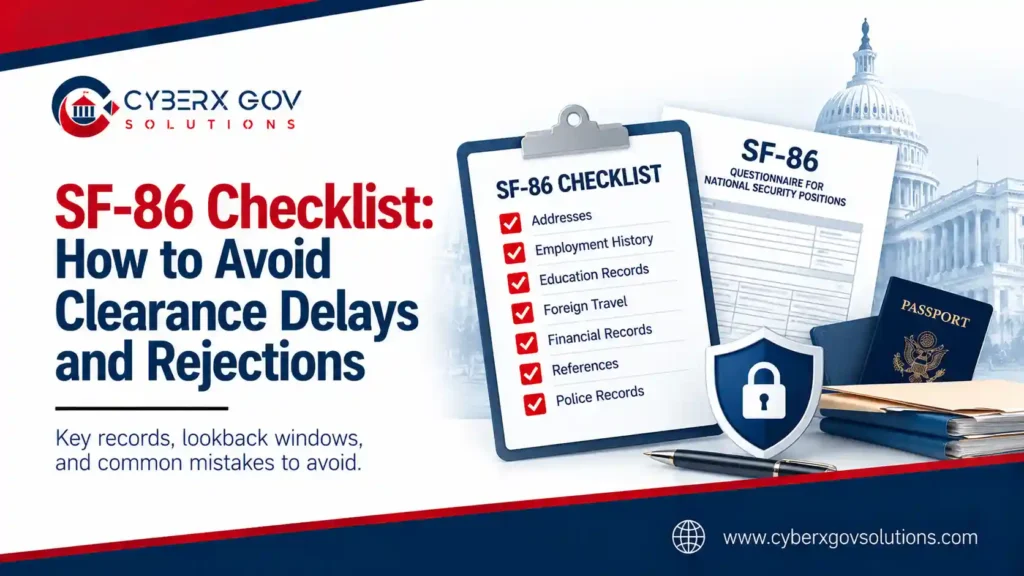
One incomplete form can stall your security clearance for weeks before an investigator reviews a single real detail. That form is the SF-86, and it is the longest, most detailed questionnaire most people ever complete for a job. Here is the good news: most delays are self-inflicted and easy to prevent. Gaps in your history, […]
SAM.gov Entity Administrator Appointment Letter: Step-by-Step FSD Guide
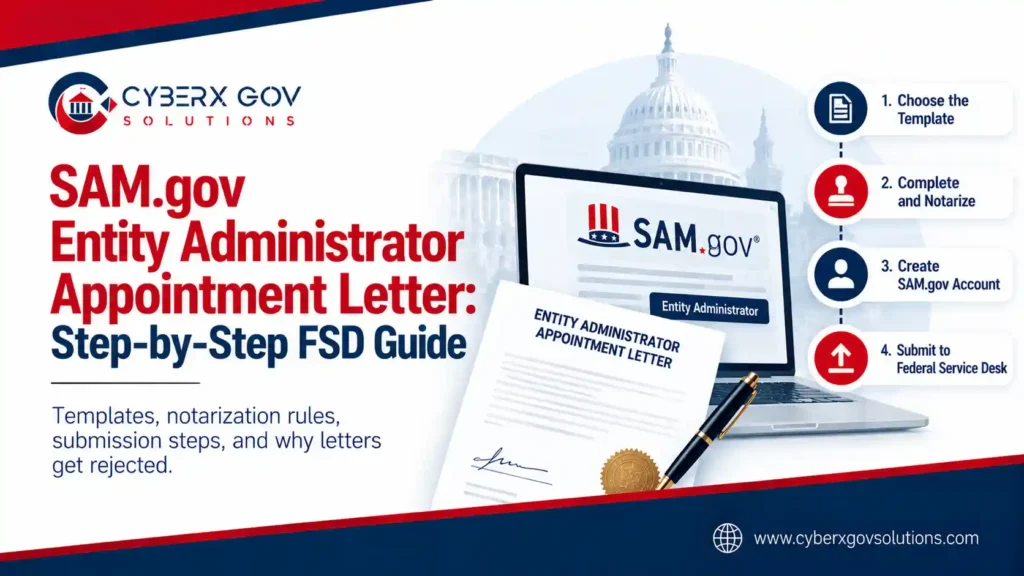
You log in to update your SAM.gov registration and find you have no access. The person who set it up left months ago, and no one else can touch the record. A renewal is due, and the clock is running. When no one can approve you from inside SAM.gov, the fix is a specific document: […]
CIO-SP3 Sunsets October 29: What Small Business IT Contractors Should Do Now
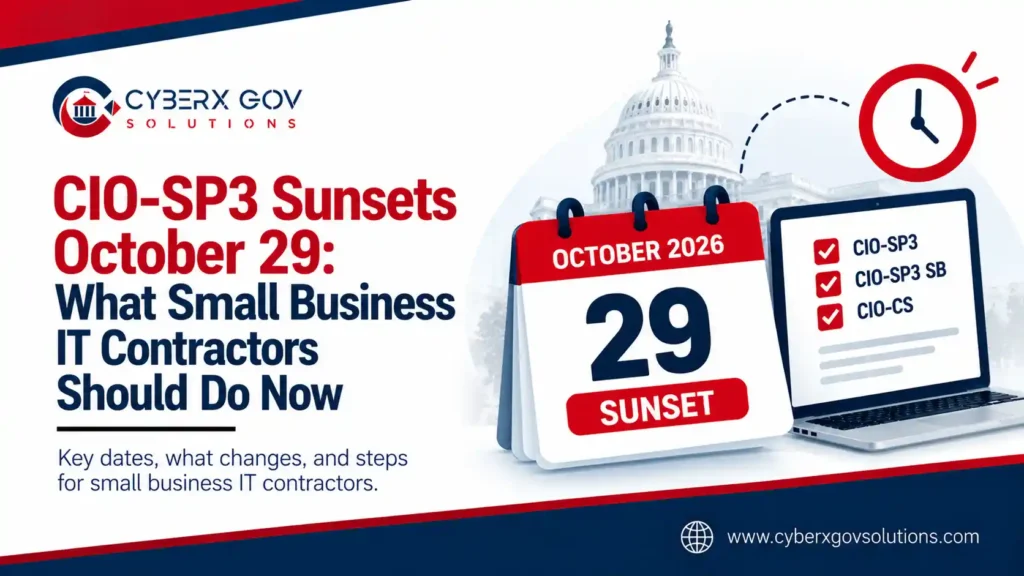
If your pipeline includes federal IT work, one date is now just days away. NITAAC has confirmed that three of its governmentwide acquisition contracts will permanently sunset on October 29, 2026. Those three vehicles are CIO-SP3, CIO-SP3 Small Business, and CIO-CS. For small businesses that built their federal IT revenue on them, this changes how […]
Government Contractor Website Checklist: The Pages Primes and Contracting Officers Look For
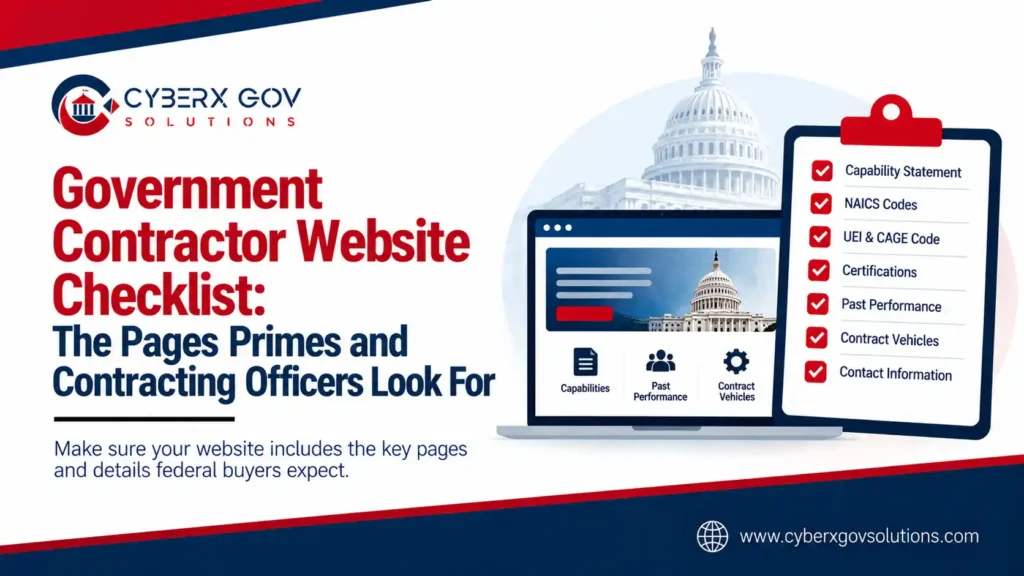
A contracting officer or a prime’s capture lead lands on your website to size you up. They have about thirty seconds. If they cannot find your NAICS codes, your identifiers, and proof that you have done the work, they move on to the next vendor. Your website is often the first real test of whether […]
Security Clearance Levels: Secret vs. Top Secret vs. TS/SCI (Hiring Guide)
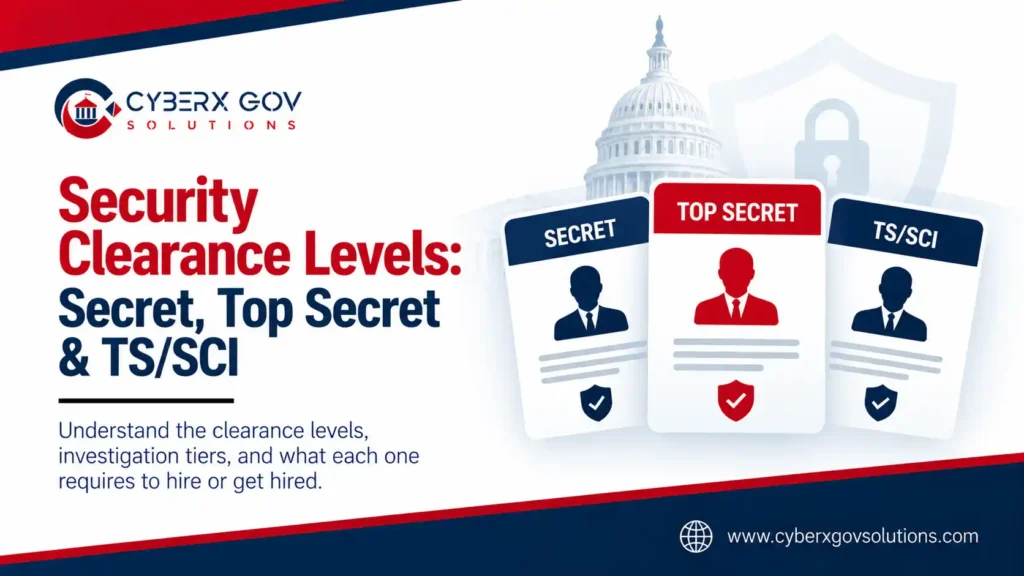
A cleared job post says “TS/SCI required,” and a strong candidate hesitates, unsure what that means or whether they qualify. Hiring managers hit the same wall from the other side. The clearance line on a req decides who can even be considered. Security clearance levels are simpler than they look, once you separate three things: […]
Micro-Purchase Threshold 2026: $15,000 Rules, Exceptions, and How to Win Purchase Card Buys
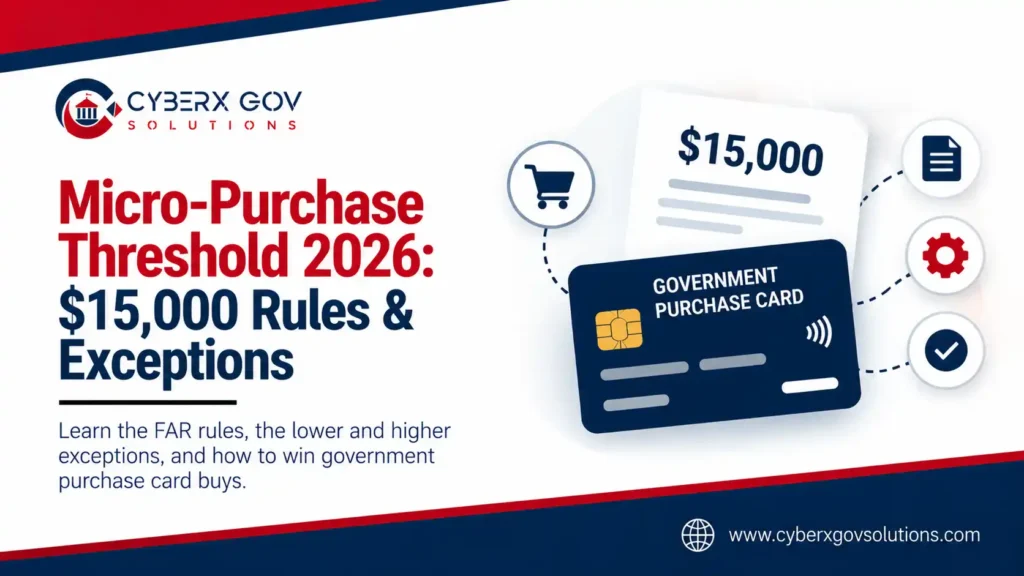
Some of the fastest money in federal contracting changes hands without a single formal bid. A contracting officer or a cardholder buys what the agency needs, often on a government charge card, and the deal is done. That lane is the micro-purchase threshold. As of 2026, it sits at $15,000. Purchases at or under that […]
Small Business Teaming: How to Win on Large Federal IDIQs
One company rarely wins the biggest federal contracts alone. The scope is too broad, the past performance bar sits too high, and the capacity demands are steep. Small business teaming is how you get around that. Partner with the right companies, and a small business can bid on work it could never reach by itself. […]
Federal vs. SLED Proposals: What Changes and What Stays the Same
Contractors experienced in federal contracting often look to state, local, and education (SLED) opportunities to expand their business. Their experience with federal proposals gives them a useful starting point. However, federal and SLED procurements have different processes, requirements, and evaluation methods. Reusing an existing federal proposal may save time, but copying it without adapting the […]