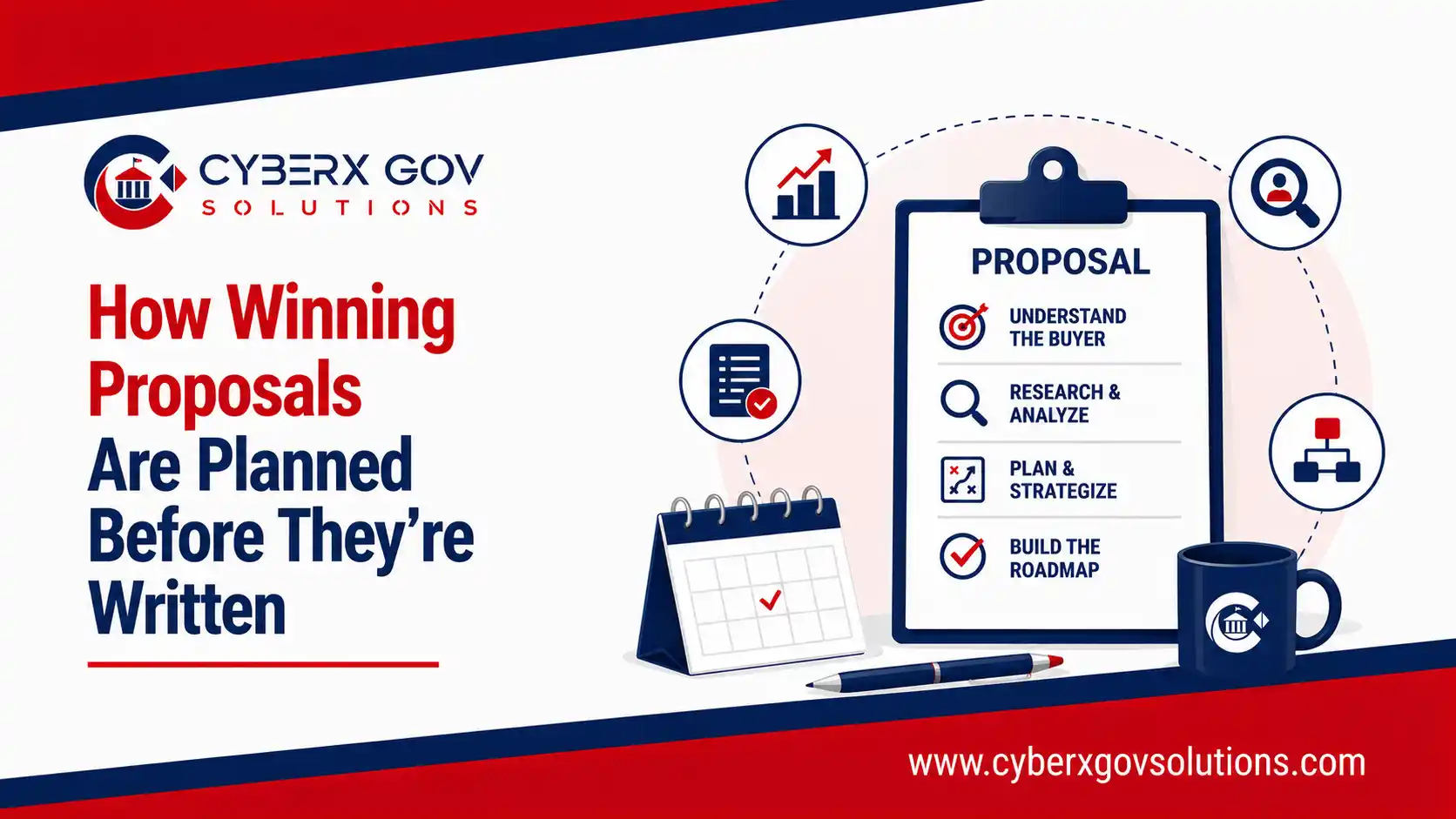
Winning a proposal doesn’t begin with writing. It begins with planning.
Many businesses believe the proposal process starts when they open a blank document. In reality, experienced Government Proposal Writers spend a significant amount of time preparing before they write the first sentence. They assess the opportunity, understand the buyer’s needs, organize information, and develop a strategy to guide the entire proposal.
This planning stage often determines whether a proposal tells a compelling story or becomes just another submission. By investing time upfront, businesses can create proposals that are more organized, more persuasive, and easier for evaluators to review.
Proposal Planning vs. Proposal Writing: What’s the Difference?
Many people use the terms proposal planning and proposal writing interchangeably, but they serve different purposes.
Proposal planning focuses on understanding the opportunity before drafting begins. It involves researching the buyer, reviewing the solicitation, assigning responsibilities, identifying key messages, and building a roadmap for the proposal.
Proposal writing, on the other hand, transforms that strategy into a complete document. Without proper planning, even skilled writers may struggle to create a proposal that remains focused, compliant, and competitive.
Why Winning Proposals Start Before the First Word Is Written
Strong proposals rarely happen by chance. They result from a structured planning process that helps teams make informed decisions before writing begins.
Professional proposal teams ask important questions early in the process:
- What problem is the customer trying to solve?
- What evaluation criteria will influence the decision?
- What strengths should our proposal emphasize?
- What information do we still need before drafting begins?
Answering these questions early creates a clear direction for the proposal and reduces unnecessary revisions later.
Instead of reacting to the solicitation after it is released, successful teams build a strategy that guides every section of the proposal.
The Bid/No-Bid Decision: The First Planning Step
One of the most overlooked stages of proposal development is deciding whether the opportunity is the right fit.
Submitting every available opportunity may seem productive, but it often stretches resources and reduces proposal quality.
Before committing to a proposal, successful teams evaluate factors such as:
- Does the opportunity align with our expertise?
- Can we meet the technical and compliance requirements?
- Do we have enough time to prepare a quality response?
- Can we offer a competitive solution?
- Does the opportunity support our long-term business goals?
A thoughtful bid/no-bid decision helps businesses focus their effort on opportunities where they have a realistic chance of success.
Understanding the Buyer’s Needs Before Writing
Every successful proposal begins with understanding the organization behind the solicitation.
Rather than immediately describing their own capabilities, experienced proposal teams first examine what the buyer wants to achieve. They study the project’s objectives, expected outcomes, evaluation criteria, and any challenges the agency or client hopes to address.
This approach changes the entire proposal.
Instead of simply explaining what the business offers, the proposal demonstrates how those capabilities solve the buyer’s specific problem.
How Government Proposal Writers Build Buyer-Focused Strategies
Experienced Government Proposal Writers know that proposals should answer the buyer’s questions; not just showcase the contractor’s achievements.
Before drafting begins, they often:
- Review the solicitation line by line.
- Identify mandatory requirements.
- Highlight evaluation factors.
- Develop key win themes.
- Gather supporting evidence from subject matter experts.
- Create a compliance checklist to track every requirement.
This preparation provides writers with a clear roadmap before they begin developing proposal content.
Planning Creates Better Collaboration
Proposal development is rarely the responsibility of one person.
A competitive proposal often requires input from technical specialists, project managers, pricing teams, executives, and business development professionals.
Without a clear plan, teams may duplicate work, overlook important information, or spend valuable time resolving last-minute issues.
A structured planning process defines responsibilities early, establishes realistic timelines, and helps everyone understand their role before writing begins. As a result, collaboration becomes more efficient, and the proposal maintains a consistent voice from beginning to end.
Building a Proposal Roadmap Before Writing
Once the opportunity has been evaluated and the buyer’s needs are understood, the next step is creating a proposal roadmap.
A roadmap acts as a blueprint for the proposal. Instead of writing section by section without direction, the team defines what each section should accomplish, who is responsible for it, and how it supports the overall proposal strategy.
An effective proposal roadmap typically includes:
- Proposal schedule and milestones
- Section owners and responsibilities
- Compliance requirements
- Key messages and win themes
- Review deadlines
- Final submission timeline
This approach keeps the proposal organized and reduces the risk of rushed revisions near the deadline.
Why Compliance Begins During Planning
Many businesses think compliance is something to check after the proposal is complete. In reality, compliance should guide the proposal from the very beginning.
Successful proposal teams review every instruction in the solicitation before writing starts. They identify mandatory requirements, required documents, page limits, evaluation factors, and submission instructions.
Planning around these requirements helps ensure every section of the proposal serves a clear purpose. It also reduces the likelihood of missing important details during the final review.
How Government Proposal Writers Reduce Risk Before Drafting
Experienced Government Proposal Writers know that strong proposals rely as much on preparation as on writing.
Before creating content, they often:
- Develop a compliance matrix.
- Organize supporting documents.
- Schedule internal review cycles.
- Gather technical input from subject matter experts.
- Confirm responsibilities across the proposal team.
- Establish quality checkpoints before submission.
These activities create a structured workflow that helps the entire team stay focused throughout the proposal process.
Common Planning Mistakes That Weaken Proposals
Even qualified businesses can lose opportunities because planning starts too late or important steps are overlooked.
Some of the most common mistakes include:
- Beginning the proposal only a few days before the deadline.
- Focusing on the company’s achievements rather than the buyer’s objectives.
- Ignoring evaluation criteria during planning.
- Assigning responsibilities without clear deadlines.
- Skipping independent reviews before submission.
- Using outdated or generic proposal content.
Avoiding these mistakes creates a stronger foundation for every proposal and helps teams work more efficiently.
A Practical Example
Imagine a small technology company responding to a government cybersecurity solicitation.
Instead of assigning one person to write the proposal immediately, the company begins with a planning session. The team reviews the solicitation, identifies evaluation criteria, creates a compliance checklist, assigns technical sections to subject-matter experts, and develops key messages aligned with the agency’s priorities.
When writing begins, every contributor understands their responsibilities, and the proposal follows a consistent strategy from start to finish. The writing process becomes faster because the planning work has already removed much of the uncertainty.
A Simple Proposal Planning Checklist
Before writing your next proposal, make sure you have completed these essential planning steps:
- Review the solicitation carefully.
- Decide whether the opportunity is the right fit.
- Understand the buyer’s objectives.
- Identify evaluation criteria.
- Create a proposal schedule.
- Assign section owners.
- Develop key messages.
- Build a compliance checklist.
- Gather supporting information.
- Plan review and approval milestones.
Completing these steps before drafting begins can improve the quality of the proposal and help your team stay organized throughout the process.
How CyberX Gov Solutions Helps
Successful proposals begin long before the writing phase. At CyberX Gov Solutions, the focus is on building a strong proposal strategy before the first draft is created. Through its Government Proposal Writing Services, the team helps businesses evaluate opportunities, understand solicitation requirements, and develop a structured proposal plan that supports every stage of the response process.
Support includes bid strategy, compliance planning, proposal roadmaps, content planning, win theme development, technical and management proposal writing, proposal reviews, and final quality assurance. Whether you’re responding to a complex federal RFP or preparing your first government proposal, CyberX works alongside your internal team to create organized, compliant, and competitive submissions.
For organizations entering the federal marketplace, CyberX also guides capability development, proposal readiness, and opportunity alignment to help establish a stronger foundation for future contract opportunities.
The Bottom Line
Winning proposals don’t start with writing; they start with planning. Businesses that invest time in understanding the opportunity, developing a clear strategy, and organizing their proposal process are better prepared to submit high-quality, compliant responses.
If your team is preparing for an upcoming government opportunity, having the right planning process in place can make a meaningful difference. CyberX Gov Solutions provides practical proposal support tailored to your solicitation, business goals, and timeline, helping you move from planning to submission with greater confidence.
Ready to strengthen your next proposal?
Schedule a consultation at https://cyberxgovsolutions.com/schedule-a-meeting/ to discuss your upcoming opportunity and build a proposal strategy designed for success.
FAQs
1. What does a government proposal writer do?
A government proposal writer prepares proposals for government contract opportunities by reviewing solicitation requirements, organizing technical information, ensuring compliance, and developing clear, persuasive responses that align with the evaluation criteria.
2. What is the difference between a government proposal writer and a grant writer?
A government proposal writer focuses on responding to government contract opportunities, such as RFPs and RFQs. A grant writer prepares funding applications for grants offered by government agencies, nonprofits, educational institutions, or research organizations.
3. Should I hire a government proposal writer or write the proposal myself?
The right choice depends on your team’s experience, available time, and the complexity of the opportunity. If you’re responding to a high-value or complex solicitation, or your team lacks proposal experience, working with professional Government Proposal Writers can help you build a more organized and competitive proposal.
4. What is proposal planning, and why is it important?
Proposal planning is the process of developing a strategy before writing begins. It includes reviewing the solicitation, understanding the buyer’s objectives, assigning responsibilities, identifying key messages, and creating a proposal roadmap. Strong planning helps reduce errors and improves the overall quality of the proposal.
5. What is the difference between proposal planning and proposal writing?
Proposal planning focuses on research, strategy, compliance, and preparation. Proposal writing is the process of turning that strategy into a complete proposal document. Effective planning provides clear direction, making the writing process more efficient and focused.
6. How do Government Proposal Writers improve proposal quality before drafting begins?
Experienced Government Proposal Writers analyze the solicitation, identify compliance requirements, create a compliance checklist, gather technical information, develop win themes, assign section owners, and establish review milestones before writing starts. This structured approach helps produce a stronger and more consistent proposal.
7. What is the biggest mistake businesses make before writing a proposal?
One of the most common mistakes is starting the writing process without fully understanding the buyer’s objectives, evaluation criteria, and submission requirements. A lack of planning often leads to rushed content, missed requirements, and proposals that fail to communicate the right value.